
Galactday: 56840.5
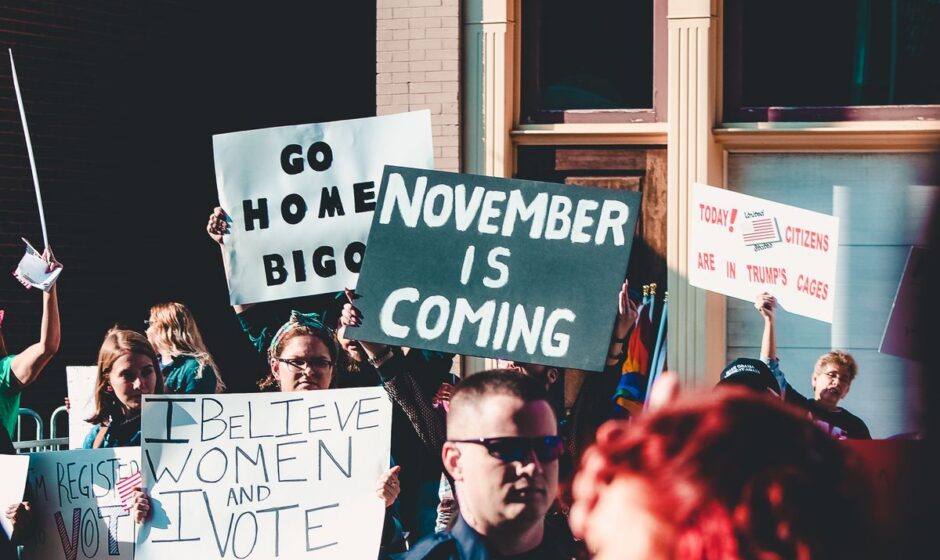
As an increasingly vocal America reminded our leaders on Election Day —this country belongs to its citizens, not to one man occupying the Oval Office. There’s something almost therapeutic about watching Americans take to the streets, under the banner of No Kings protests & to speak out against injustice. Perhaps it is the realization that our country has not surrendered its democratic instincts after all. Photo by Rosemary Ketchum
Perhaps it is the collective exhale of people who have spent years watching political norms, institutional safeguards and basic expectations of presidential conduct become increasingly disposable.Whatever the explanation, the message is unmistakable: America does not belong to one man. And that should never have been a controversial proposition.
For a nation that has spent generations championing democracy around the world, the spectacle of a president behaving as though the United States were his personal property has been both embarrassing and deeply consequential. The presidency is not a real estate investment, a family business or another opportunity to attach a recognizable name to a questionable product. It is an Office of Public Trust, carrying responsibilities that extend well beyond the personal interests, grievances and ambitions of the person elected to occupy it.
Yet Trump has repeatedly approached the presidency through a distinctly transactional lens. What does he get out of it? Who benefits him? Who owes him? Who can be rewarded, punished or made an example of? What can be leveraged into another personal or political advantage? That isn’t leadership. It is the mentality of a two bit con man who has mistaken access to power for ownership of the institution.
Our country is not another Trump property. There is a familiar pattern in Trump’s public life. The branding comes first. The promotion follows, but the promise is usually grander than the product, and the customer is frequently left holding the bill. The Pickpocket Effect. That might be an acceptable subject for business criticism or political satire when discussing a private enterprise. It becomes something considerably more serious when the product being marketed is American leadership.
The United States is not a collection of hotels, golf courses, licensing agreements and promotional opportunities. Its value cannot be measured by the personal enrichment of its president. Its international standing cannot be treated as a negotiating chip in someone’s personal vendetta. And its institutions should not be expected to bend simply because the person occupying the Oval Office considers himself entitled to special treatment.
America’s greatest asset has never been the name of its president. It has been the credibility of its institutions and the reliability of its commitments. Allies need to know that American promises mean something. Businesses need a reasonably predictable environment. Citizens need confidence that government decisions are made in the public interest, not as extensions of personal relationships or political loyalty. When those expectations become uncertain, the damage extends far beyond Washington.
Perhaps just as troubling has been the transformation of the Republican Party, it literally forgot its assignment. Republicans once celebrated limited government, constitutional restraint, fiscal responsibility and individual liberty, Now republicans twist themselves into pretzels and find themselves defending behavior that sits uneasily alongside those principles.
Congressional oversight should not be considered an act of betrayal. Investigating executive decisions is not an attack on democracy. Demanding transparency is not disloyalty and asking whether public resources or government authority are being used appropriately should be the most ordinary business of representative government.
Yet too many Republican elected officials have appeared more concerned about maintaining favor with a convicted felon than exercising independent judgment. The result has been a political environment in which loyalty to one individual can seem more important than loyalty to the institution that individual was elected to serve.
The Jonestown comparison is uncomfortable, but it captures something about the apparent surrender of independent political judgment. A movement that once claimed to distrust concentrated power has become remarkably accommodating toward it. There is a difference between supporting a president’s policies and surrendering one’s responsibility to question him. Republicans who recognize that distinction should not have to apologize for it, yet the silence is deafening.
One of the more extraordinary features of Trump’s political persona is his apparent ability to turn virtually every challenge into a personal grievance. Legal scrutiny becomes persecution. Investigations turn into conspiracies. Criticism becomes evidence of disloyalty and accountability becomes an assault on the person rather than an examination of conduct.
This is a particularly convenient arrangement for someone who has built so much of his public identity around confrontation. A criminal defendant has a right to defend himself. A president has a responsibility to respect the independence of the justice system. Those principles are not contradictory, and neither should be confused with political persecution. But Trump has repeatedly blurred that distinction, making his legal troubles part of his political identity.
It is difficult to imagine a more damaging precedent than teaching the public that accountability is something to be feared, mocked or dismissed whenever it involves someone powerful. The presidency should elevate the responsibilities of the person holding the office. It should not become a shield against the ordinary expectations of citizenship.
Trump’s political instincts often seem to confuse dominance with achievement. Winning an argument, humiliating an opponent or forcing someone to concede may provide a momentary political thrill, but none of those things necessarily makes the country better. That’s the difference between winning and governing.
Presidential leadership requires something different. It requires judgment, patience, an ability to listen, a willingness to acknowledge mistakes and, above all, an understanding that the interests of the country must sometimes take precedence over personal preferences. A president does not have to be universally liked. But the office demands a degree of maturity and respect for its responsibilities that cannot be manufactured through branding, rallies or television appearances.
There is also a distinction between being a successful businessman and being a successful public servant. The marketplace may reward aggressive salesmanship, but democratic government requires public confidence. Customers can walk away from a bad business. Citizens cannot simply walk away from their bad government, but we can vote and we can speak out.
The growing visibility of the No Kings movement represents something worth paying attention to. It is a reminder that political power does not originate in the White House. It originates with the people and Americans are finding our voices again. Peaceful demonstrations, public criticism, congressional oversight and independent journalism are not inconveniences to democracy. They are among its essential safeguards.
There is something encouraging about Americans who might disagree on plenty of other issues finding common ground around a basic proposition: No president is entitled to rule without limits. That sentiment should resonate across party lines. It should resonate with Republicans who still believe in constitutional government, independents who are tired of political theatrics and Democrats who have spent years warning about the consequences of concentrating too much power in one person’s hands. And it should resonate with anyone who believes that the American experiment is worth preserving.
A functioning democracy does not require citizens to agree with one another. It requires them to agree that the rules apply to everyone. A change in congressional control, if accompanied by a genuine commitment to oversight, can provide an important opportunity to restore some balance. Investigations should follow evidence. Public officials should answer legitimate questions. Conflicts of interest should receive scrutiny. Government decisions should be examined on their merits, not dismissed because the findings might embarrass someone politically powerful. That is not revenge, it is governance.
Democrats would be making a serious mistake if they treated congressional oversight as an opportunity for political spectacle. The public does not need another circus. It needs facts, documentation, transparency and accountability. The objective should not be to replace one form of political loyalty with another. It should be to restore the expectation that elected officials answer to the public. And Republicans should understand that they have an opportunity of their own: They can reclaim their independence and demonstrate that a political party is more than the temporary vehicle of one personality.
Perhaps the most remarkable thing about this entire period is how unnecessary the central argument should be. Americans should not have to march in the streets to remind their president that he is not a monarch. We should not have to demand that elected representatives perform their constitutional duties and they should not have to explain why personal enrichment, political favoritism and the erosion of public trust are legitimate subjects of scrutiny.
The presidency is not a prize to be exploited, it is a responsibility to be honored. Trump may have spent much of his life believing that every encounter is a transaction and every relationship an opportunity to gain an advantage. But the United States is not another business deal, and its citizens are not customers waiting to be persuaded that a disappointing product is actually a luxury experience.
Americans deserve leadership that takes pride in our country rather than demanding that the country take pride in one man. We deserve a government that works for us, institutions that can withstand political pressure and elected officials who understand that public service is not a personal entitlement. The American presidency should represent the best of what our country aspires to be, not the worst habits of someone who believes the rules are for everyone else.
And perhaps that is what this message ultimately represents. Not a demand for a different king. Not a demand for another personality to dominate the political conversation. Just a reminder —we hired a president, we did not surrender our country to a charlatan.