
Galactday: 56298.4
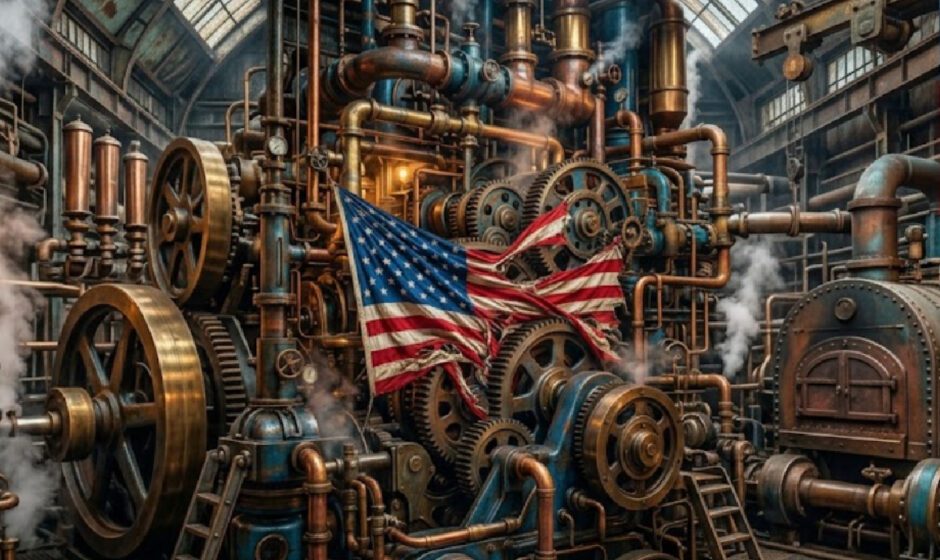
The historical warning from President Dwight D. Eisenhower about the military-industrial complex has moved from a cautionary tale to a visceral, modern reality. When war becomes a profitable business, the incentive for peace is replaced by a perverse incentive for perpetual conflict. This dynamic does more than just drain the national treasury; it creates a cesspool of interests that fuels authoritarianism, empowers the spineless, and erodes the very foundations of American power. To understand the current crisis, one must look at how the machinery of war and the psychology of the “strongman” work in tandem to hollow out a nation from the inside, trading the long-term health of a democracy for the short-term profits of a few. Photo by AWF
The relationship between war profiteering and warmongering is not merely coincidental; it is structural. When private military contractors, arms manufacturers, and global energy giants see their stock prices surge during combat operations, the economic incentive shifts away from resolution and toward escalation. As Major General Smedley Butler famously argued in his 1935 treatise, War Is a Racket, the soldiers pay the price in blood while a small group of insiders reaps the financial rewards. In the modern context, this racket is facilitated by a revolving door where military officials retire only to take high-paying board seats at defense firms, while those same firms fund the political campaigns of the people sending troops into battle. In this environment, diplomacy is often viewed as a failure of business, while military intervention—even illegal or unauthorized strikes—is seen as a growth opportunity. When greed is the primary driver of foreign policy, the human cost becomes a secondary line item on a corporate balance sheet.
This economic engine requires a specific kind of leadership to keep it running—the kind that prioritizes ego and self-interest over the rule of law. Authoritarianism is often marketed to a frustrated public as “national strength” and “decisive leadership,” but a closer look at the current erratic landscape reveals that this image is a brittle mask for profound personal and systemic weakness. Nothing exposes a leader’s weakness more than corruption. A truly strong leader trusts the institutions of their country—the courts, the legislature, and the free press. They do not fear the checks and balances designed to keep power in line. Conversely, a weak, corrupt leader acts as a parasite; they must weaken those institutions to protect themselves from accountability. Whether it is falsifying business records, committing fraud, or using the highest office in the land to settle personal scores, a leader driven by greed is inherently unstable. They are forced to demand absolute loyalty from subordinates because they know their actions cannot survive the scrutiny of a fair and transparent system.
This demand for loyalty has created a dangerous vacuum of courage, where “republican spinelessness” has weakened our country’s back. By refusing to act as a check on a leader who treats our Constitution as a suggestion, these politicians have allowed the fever of authoritarianism to take hold. They have turned public service into a dysfunction of careerism where staying in power is more important than standing up for the truth. This internal rot doesn’t stay within the borders of Washington; it spills out onto the world stage, transforming the American image from a beacon of stability into a source of global anxiety.
American power has historically been built on a foundation of “soft power”—alliances, cultural influence, and a reputation for upholding international norms. In any group of friends, once one person starts acting like a “prick”—bullying others, breaking promises, and acting only for themselves—they eventually end up alone. The same principle applies to geopolitics. When a world power acts unilaterally, launching strikes without congressional approval or international consensus, it signals to its allies that it is an unreliable partner. Nations that have stood by the U.S. for decades are beginning to realize that an American promise is now only as good as the current four-year election cycle. This unpredictability forces even our closest friends to hedge their bets, seeking new alliances and trade blocs that purposefully exclude a volatile and isolated United States.
A power without friends is no power at all. Military might alone cannot sustain a global economy or ensure domestic prosperity. Without the trust of the international community, the U.S. loses the ability to set global standards, protect its currency, and negotiate trade deals that benefit its citizens. Diplomacy is not just about “class” or decorum; it is the vital infrastructure of peace. Without it, the “American Century” comes to an abrupt and lonely end. This is the ultimate cost of the strongman’s greed: in the attempt to appear invincible, they render the nation vulnerable and friendless.
However, history suggests that this fever eventually breaks. The catalyst is usually a profound and widespread sense of public disgust. People eventually grow tired of the bloviating and the crude rhetoric when it fails to put food on the table or when it leads to unnecessary, illegal wars that put their children in harm’s way. As war profiteering drives up energy costs and global isolation weakens the dollar, the “business genius” myth surrounding the strongman begins to evaporate, leaving behind the reality of a convicted felon using the state as a personal piggy bank.
The United States and the world at large will not be the same after this period of volatility. The world has seen the underbelly of the American system—how easily a few greedy individuals and a spineless legislature can hijack the machinery of a superpower. Reclaiming democratic values and regaining the trust of the world will require more than just a new election; it will require years of showing genuine class, integrity, and a renewed commitment to the rule of law.
The disgust being felt today is a sign of life—an immune response to a political infection. It reminds us that empathy, diplomacy, and accountability are not weaknesses to be discarded, but the very things that make a nation strong enough to lead. The path back involves draining the swamp and rebuilding a national spine that is strong enough to say “no” to the whims of a corrupt leader and “yes” to a future where power is used for the common good rather than private gain. Authoritarianism is, at its heart, a perversion of power, and its inevitable failure lies in the fact that greed can never build anything that lasts as long as the human desire for freedom.