
Galactday: 56328.5
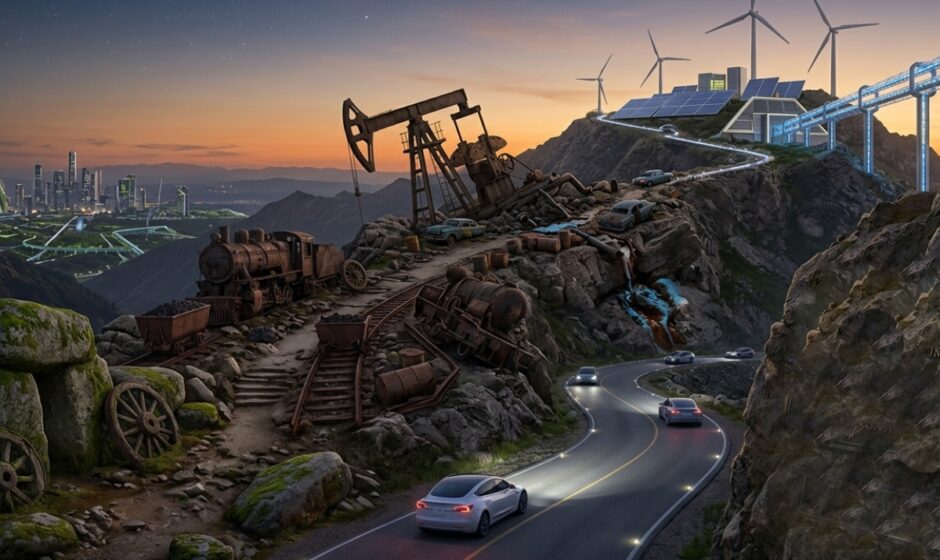
History is often taught as a series of breakthroughs, but viewed through a wider lens, it looks more like a recurring geometry. We are currently witnessing the “Electric Engine Revolution” in America—a shift many attribute to environmental consciousness. However, a closer look suggests a more cynical, yet fascinating, catalyst: the desperate attempt to preserve the “Oil Hill.” Photo by AWF
The Irony of the High Ground. For decades, the global power structure has been defined by a single resource. This “Oil Hill” was guarded by “Kings” who sought to maximize their leverage through scarcity and control. Yet, the paradox of greed is that it eventually overreaches. By driving price volatility and fueling geopolitical conflict to protect their interests, these players inadvertently made the alternative—electrification—not just an ecological choice, but a financial and national security imperative.
In trying to save their dominance, they accelerated their obsolescence. When self-interest becomes the primary driver, the gains of the successor become self-evident. The high cost of the old world became the venture capital for the new one.
The Stone Age and the Plastic Fallacy. There is a famous saying: “The Stone Age didn’t end because we ran out of stones.” The humorous modern addendum is that it ended because we invented plastic. While a joke, it highlights a profound truth about human progression: we rarely “solve” a dependency; we usually just trade it for a more complex one.
We are not leaving the Oil Age because the wells are dry; we are leaving it because we have built a higher hill. We are trading the “wellhead” for the “lithium mine” and the “refinery” for the “semiconductor fab.”
The Fractal Progression. This movement is what can be called a Fractal Progression. If you zoom in on the 21st-century transition from fossil fuels to the electric grid, you see the same patterns that governed the transition from wood to coal, or from salt to refrigeration.
- Consolidation: A resource becomes essential.
- The Rent-Seekers: “Kings” emerge who charge the rest of the world “rent” just to exist on a planet they were naturally born onto.
- The Brink: Greed leads to hatred and friction, pushing society to the edge of destruction.
- The Leveling: A new technology levels the playing field, only to eventually form the base of a new, even higher hill.
The Thousand-Year “Now”. To a human, a millennium feels like an eternity. But in the heartbeat of history, 1,000 years from now is happening “now.” We are the “ancients” currently navigating the “brink.”
The tragedy of the human operating system is that we have been here before, just with different players and different props. Whether it was the Salt Kings of the past or the Tech Monopolies of the future, the script remains the same: we turn a planet of abundance into a subscription service.
Beyond the Brink. If we are to hope for a “better now” in the next heartbeat of history, the revolution cannot just be technological. Turning the “Oil Hill” into an “Electric Hill” changes the landlord, but it doesn’t end the rent. The true “leveling of the playing field” only occurs when we realize that the brink of destruction isn’t an inevitable part of the fractal—it’s a signal to stop building hills and start sharing the ground.
Until then, we remain self-aware passengers on a repeating loop, watching as one king is buried by the next, while we pay for the privilege of the view.