
Galactday: 55915.1
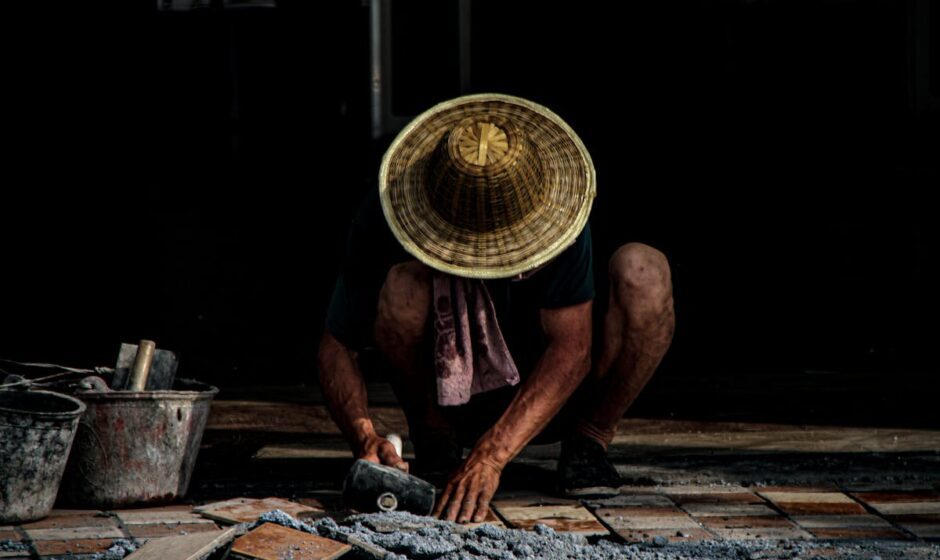
We view the ancient world as a nightmare of servitude and the modern world as a beacon of liberty. But when it comes to the basic economics of survival—housing, debt, and employment—the 21st-century “gig worker” is far more vulnerable than the subjects of the Pharaohs. Photo by Eraisy Ramos
We tend to look back at the early civilizations—Mesopotamia, Egypt, the Indus Valley—with a mixture of pity and horror. We see the Pyramids and imagine the crack of the whip. We read about the “divine right of kings” and see a lack of agency. We congratulate ourselves that, unlike the ancient peasant bound to the soil, we are free agents in a global marketplace.
But if we strip away the political philosophy and look strictly at the economic mechanics of daily life, a startling paradox emerges.
The modern worker possesses infinite freedom but almost zero security. The ancient commoner possessed almost no freedom, yet enjoyed a level of structural safety that is now considered a luxury. In our rush to build a flexible, on-demand economy, we have inadvertently recreated the vulnerability of the ancient world without keeping its safety nets.
In the 21st century, the defining economic anxiety is precarity. Whether you are an Uber driver, a freelance graphic designer, or a corporate employee in an “at-will” state, you live with the knowledge that your income is contingent. The market decides if you are useful; if the market dips, you are cut loose. You are a commodity to be bought and sold by the hour.
In the ancient world, this concept was alien. In civilizations like Old Kingdom Egypt or the Zhou Dynasty in China, you didn’t “apply” for a job; you were born into a station.
While this sounds oppressive to modern ears, it carried a massive economic benefit: unemployment was effectively impossible.
To a Pharaoh or a Mesopotamian King, the peasantry was not a cost to be minimized, but a resource to be husbanded. A peasant sitting idle was as wasteful as a chariot left to rust. Consequently, the state ensured you worked. And when you couldn’t farm—during the annual flood seasons or droughts—the state didn’t lay you off; it shifted you to public works and paid you in rations from the central granary.
This wasn’t charity; it was maintenance. Just as a modern delivery driver maintains their truck, the ancient state maintained its population to ensure they could work again next season. Today, when a company faces a downturn, it sheds workers to save money. In the ancient command economy, shedding workers was viewed as an act of self-destruction.
Today, housing is an asset class. It is something you fight for in a competitive market. If you miss rent, you face eviction. The “right to shelter” is not guaranteed by the market; it is conditional on your solvency.
In the early agrarian empires, housing was not an asset; it was a tool of labor. In the feudal-style systems of the ancient world, a peasant was often legally “bound to the land.” We usually interpret this as a restriction on movement—which it was. But we forget the inverse protection: if you are bound to the land, the land is also bound to you.
Eviction was extremely rare because it made no economic sense. A landlord who evicted a family lost the labor required to farm that plot. Thus, the ancient peasant had a “right of attachment” to their home. They could not easily leave, but they also could not be easily displaced by a landlord looking to flip the property or raise the rent.
The modern tenant is free to move anywhere, but belongs nowhere. The ancient peasant was free to go nowhere, but belonged somewhere.
Perhaps the most shocking contrast lies in how we handle debt. In the 21st century, debt is often permanent. Student loans, mortgages, and medical debt can follow a person until death. There is no systemic “reset” button for the population.
The ancients, however, understood something we have forgotten: debt destabilizes society.
If too many commoners fell into debt peonage, they couldn’t pay taxes and couldn’t fight in the army. To prevent societal collapse, ancient kings—most famously in Babylon—invented the Clean Slate Edict.
When a new king took the throne, or during times of crisis, he would proclaim a Jubilee. The clay tablets recording agrarian debts were literally soaked and smoothed over. The slate was wiped clean.
Figures like Hammurabi understood that mathematical compound interest grows faster than the real-world economy (crops and herds). If they didn’t intervene, the creditor class would swallow the entire economy. Today, we protect the creditor at all costs; the ancients frequently protected the debtor to save the state.
Finally, there is the matter of time. We assume ancient life was a non-stop grind of backbreaking labor. While the work was physically harder, the rhythm of life was surprisingly humane compared to the modern 24/7 “hustle.”
Ancient labor was seasonal. You worked incredibly hard during planting and harvest, but for large chunks of the year, the pace slowed. Furthermore, the calendar was packed with obligatory festivals. Records from the artisan village of Deir el-Medina in Egypt show that workers had roughly one day off every three days for weekends, religious festivals, and celebrations.
The modern worker, tethered to email and Slack, has dissolved the boundary between “work time” and “life time.” We have traded the physical burden of the plow for the mental burden of never-ending availability.
None of this is to say we should return to the Bronze Age. The ancient world was rife with disease, violence, and rigid hierarchy. A modern dental appointment alone is worth more than a King’s ransom in ancient Sumer. But the comparison highlights a stark trade-off. The transition to the modern world was a trade of Security for Liberty.
We have gained the liberty to choose our careers, move cities, and potentially strike it rich—opportunities the ancient peasant never dreamed of. But we have paid for it with a chronic, low-level anxiety about the basics of survival. The ancient peasant did not lie awake at night worrying if their job would exist in the morning, or if the market would crash. Their misery was guaranteed, but so was their place in the world.
As we navigate the volatility of the 21st century, perhaps we should look back at those clay tablets. We don’t need to bring back the Pharaohs, but we might want to reconsider the value of a Clean Slate.