
Galactday: 56084.9
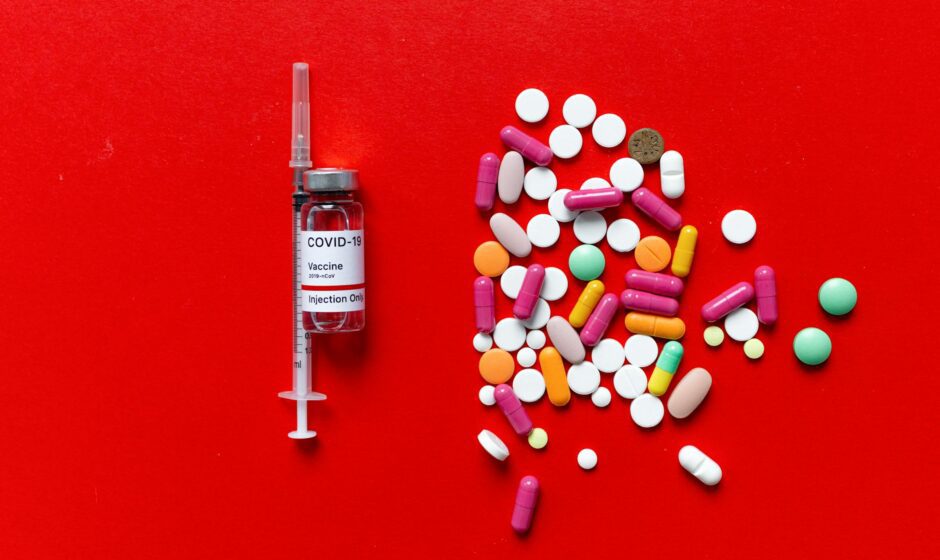
The convenience of a monthly pill remains a dream primarily because the human body is designed as an incredibly efficient detoxification machine. The moment a medication enters the bloodstream, the liver and kidneys begin a relentless process of filtration and excretion. This is defined by a drug’s “half-life”—the time it takes for the concentration of a substance to reduce by half. For many modern medicines, this window is a matter of hours. To maintain a therapeutic effect, patients must “top off” the system with a daily dose, effectively fighting a losing battle against a biological “bucket with a hole in the bottom” that refuses to stop leaking. Photo by Maksim Goncharenok
Beyond chemistry, the physical logistics of the human digestive tract impose a strict 24-hour deadline. Most oral medications must be absorbed in the small intestine, a journey that only lasts as long as the “transit time” of a single meal. Once a pill passes through this absorption window and reaches the colon, its ability to enter the bloodstream drops to near zero. Furthermore, safety remains a critical hurdle; if a “30-day pill” caused an unforeseen allergic reaction or toxic side effect, doctors would have no way to neutralize or remove the medication, leaving the patient trapped in a dangerous physiological state for an entire month.
The Dawn of Superscience: From Pills to Programs. As we move toward the era of “superscience,” the paradigm of medicine is shifting from passive chemical ingestion to active biological programming. DNA origami stands at the forefront of this revolution, utilizing the four bases of genetic code as structural building blocks to fold into three-dimensional nanomachines. These structures are not mere containers; they are mechanical devices capable of “logic.” By using molecular sensors, these nanobots can be programmed to remain inert until they detect a specific disease signature, such as the unique acidic environment or specific enzyme markers of a tumor, at which point they “unfold” to deliver a precise strike.
Research published in 2025 and early 2026 highlights the transition of these DNA nanostructures from theoretical models to advanced preclinical and early clinical evaluations. Unlike traditional chemotherapy, which attacks both healthy and malignant cells, DNA origami structures can be functionalized with aptamers—short DNA or RNA strands that act as “keys” to specific cellular “locks.” This ensures that the toxic payload is only released when the nanobot successfully identifies a cancer cell, significantly reducing the systemic side effects that currently limit the dosage and frequency of life-saving treatments.
The “In Situ” Pharmacy: Manufacturing the Cure. The ultimate goal of this technology is the “in situ” pharmacy—a system that utilizes the body’s own raw materials to manufacture cures on demand. Instead of carrying a backpack of chemicals, these nanomachines would function as molecular assemblers, scavenging floating enzymes, amino acids, and glucose to synthesize hormones or repair proteins directly at the site of injury. Recent advancements in bio-hybrid nanorobots involve integrating living components, such as bacteria or enzymes, with synthetic DNA scaffolds. These hybrids can use the body’s own ATP (adenosine triphosphate) as a power source, enabling them to perform complex chemical reactions without the need for external batteries or frequent refills.
This would effectively turn the body into a self-correcting system, moving away from the “sledgehammer” approach of systemic medication toward a “sniper” approach that operates at the cellular level. For example, rather than a patient with diabetes taking a daily insulin injection, a swarm of glucose-sensing nanobots could reside in the bloodstream, synthesizing or releasing micro-doses of insulin the exact second a blood sugar spike is detected. By operating on a feedback loop similar to natural organs, this technology promises to eliminate the “peaks and valleys” of drug concentration that characterize modern oral dosing.
Cloaking the Future: Surviving the Immune System. For these superscience therapies to work, they must first survive the body’s “search and destroy” mechanisms. The immune system is notoriously adept at identifying and dismantling foreign objects, often destroying nanomedicines before they reach their target. This is known as the “protein corona” effect, where blood proteins stick to the surface of a nanoparticle, signaling white blood cells to attack. To combat this, researchers are employing “biological camouflage” techniques such as cell-membrane wrapping. This involves coating a synthetic nanobot in the actual membrane of a patient’s own red blood cell or platelet, effectively giving it a “Don’t Eat Me” signal that allows it to circulate undetected for weeks.
In addition to membrane wrapping, 2026 has seen the rise of zwitterionic polymers as a replacement for older cloaking chemicals like PEG (polyethylene glycol). These polymers create a super-dense hydration layer—a suit of armor made of tightly bound water molecules. Because the immune system’s sensors only “feel” water when they bump into the nanobot, the device remains invisible to the body’s defenses. This level of stealth is crucial for crossing the Blood-Brain Barrier (BBB), a formidable physiological wall that currently blocks nearly all drugs for Alzheimer’s, Parkinson’s, and depression. Emerging studies show that “soft” and “flexible” DNA origami structures can traverse the BBB more effectively than rigid particles, opening a gateway for treating neurological disorders that were once considered unreachable.
A New Horizon for Human Health. As we stand at the intersection of nanotechnology and biology, the limitations of the “monthly pill” are beginning to dissolve. The shift from mass-produced chemicals to personalized, programmable nanomedicine represents one of the most significant leaps in the history of healthcare. While regulatory hurdles and manufacturing scalability remain challenges in 2026, the progress in DNA origami and bio-hybrid robotics suggests that the next generation of medicine will not be something we “take,” but something that lives within us—a quiet, invisible guardian that maintains our health one molecule at a time.