
Galactday: 56038.3
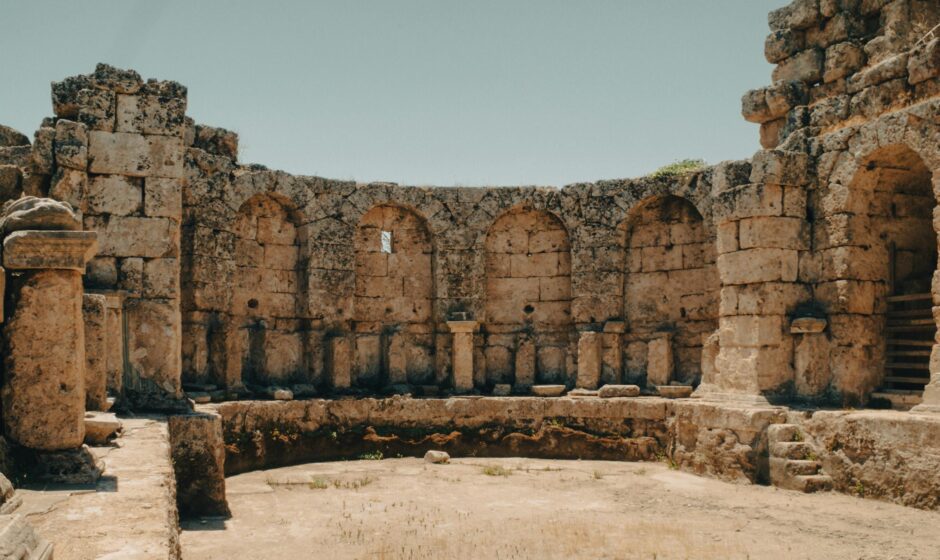
Across the long arc of human history, the idea of permanence has proven to be one of humanity’s most enduring illusions. Kings have ruled, empires have expanded, nations have risen to dominate vast stretches of land and people — and then they have disappeared. Their flags stopped flying, their capitals emptied, and their names slipped from daily speech into textbooks. What once felt immovable became a remnant beneath layers of time. Photo by Aysegul Aytoren
From the earliest city-states of Mesopotamia to the global superpowers of the modern era, history follows a recurring pattern. Power accumulates. Confidence hardens into certainty. Institutions grow complex, borders expand, and prosperity convinces those living within the moment that what exists now will always exist. Yet history shows that no civilization, no matter how advanced or dominant, has escaped decline.
Ancient Rome offers the most commonly cited example. At its height, Rome controlled much of Europe, North Africa, and the Middle East. Its engineering feats, legal frameworks, and military organization shaped the Western world for centuries. To those living under Roman rule, the idea that the empire could one day fall would have seemed implausible. Rome was the world. And yet, over time, internal decay, economic strain, political instability, and external pressure eroded its foundations. What remained were ruins, records, and lessons studied by future generations.
Rome was not unique. The same fate met the Mayan civilization, once renowned for its astronomical knowledge and city planning. The Khmer Empire, which built the vast Angkor temple complex, collapsed into obscurity. The Mongol Empire, the largest contiguous land empire in history, fragmented within generations. Even relatively modern empires — the Ottoman, Austro-Hungarian, and British — eventually surrendered their dominance to time and change.
What separates these civilizations from those living today is not destiny, but distance.
Modern nations often view themselves as exceptions to historical patterns. Technological advancement, economic systems, and global connectivity create a sense that collapse belongs to a less sophisticated past. Yet history does not suggest that progress grants immunity. It suggests that complexity introduces new vulnerabilities.
Even our great United States, like every nation before it, exists within a historical moment rather than outside of history. Its institutions, culture, and influence feel permanent to those living within them because permanence is easiest to believe when one is standing inside it. But history is not written for those in the present. It is written by those who come later, looking back.
A thousand years can feel like an eternity in human terms. It spans dozens of generations, countless lifetimes, and unimaginable change. Yet on the scale of civilization, it is little more than a blink. The pyramids of Egypt are more than 4,500 years old. Long before modern nations existed, they were already ancient. What feels distant to us now will one day feel recent to someone else.
Future historians may one day speak of today’s world the way modern teachers speak of Rome — with measured distance, summarizing centuries in chapters, reducing lived experiences into timelines and bullet points. Political debates that feel urgent now may become footnotes. Cultural conflicts that dominate headlines may be condensed into a single paragraph explaining a broader societal shift.
This perspective is not meant to diminish the present, but to contextualize it.
Understanding the temporary nature of nations can foster humility rather than fear. It reminds societies that strength is not guaranteed, that maintenance matters, and that internal cohesion often determines longevity more than external dominance. Civilizations tend to fall not in moments of sudden catastrophe, but through slow erosion — neglecting institutions, widening inequality, loss of shared identity, and resistance to adaptation.
History does not repeat itself precisely, but it echoes. Each era believes it is new, unprecedented, and uniquely complex. Every era is correct — and yet every era is subject to the same fundamental truth: nothing built by humans lasts forever.
What remains are ideas, lessons, and artifacts. The question history leaves behind is not which civilization lasted the longest, but which ones understood their fragility early enough to act wisely within it.